
In an interview with Damien Hirst a couple of years ago, Yayoi Kusama confessed a deep fear of hers: ‘I am not afraid of life, I am not afraid of death. I am afraid of loneliness’.
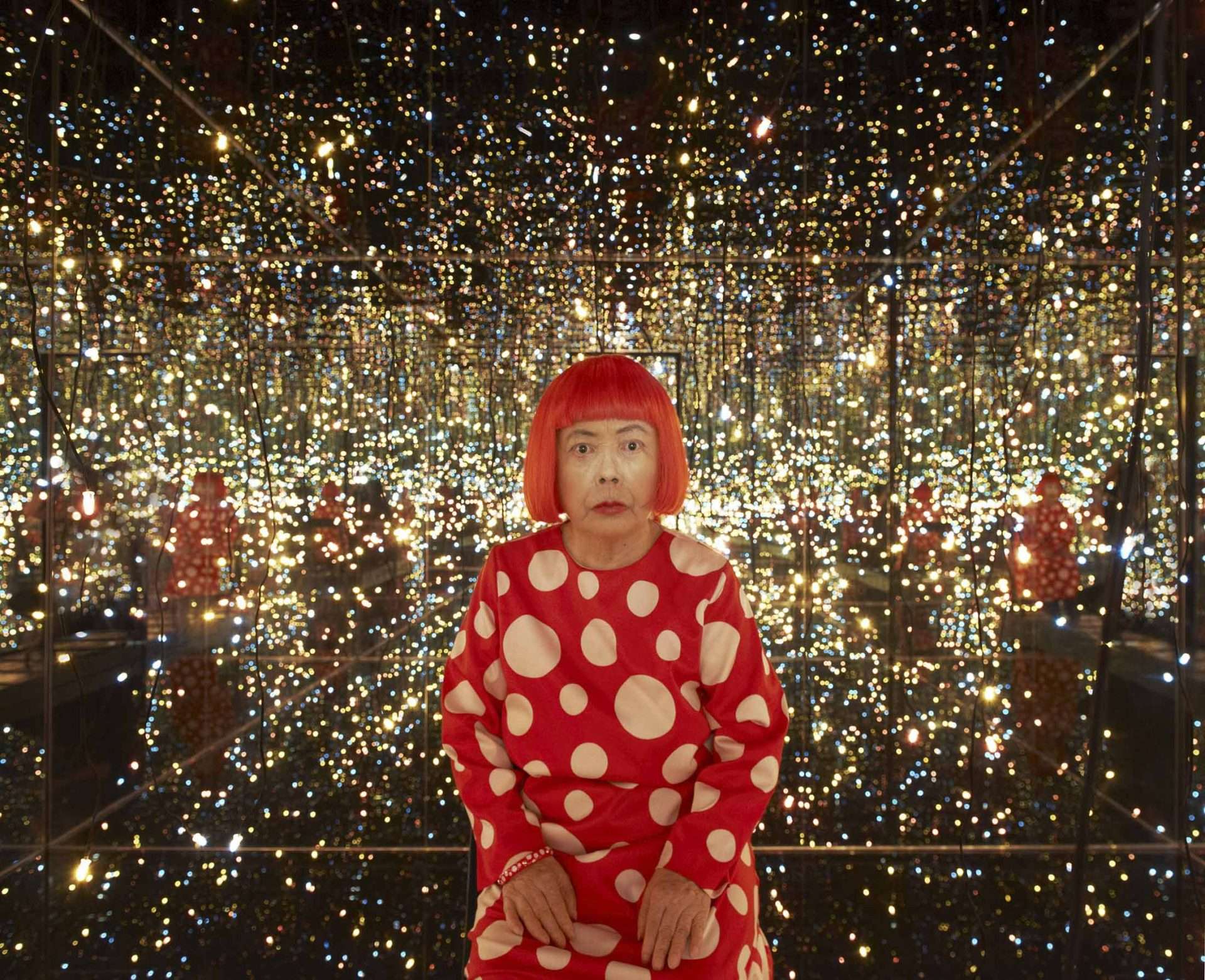
But as Stefano Raimondi, the curator of the marvellous exhibition currently underway at the Palazzo della Ragione in Bergamo, points out, the Infinity Mirror Room Fireflies on the Water, thanks to which Kusama is bringing thousands of people to touch her soul,
even if her works speak to millions of people, the artist is always alone in the process of creation, she annihilates herself and dissipates into the universe.
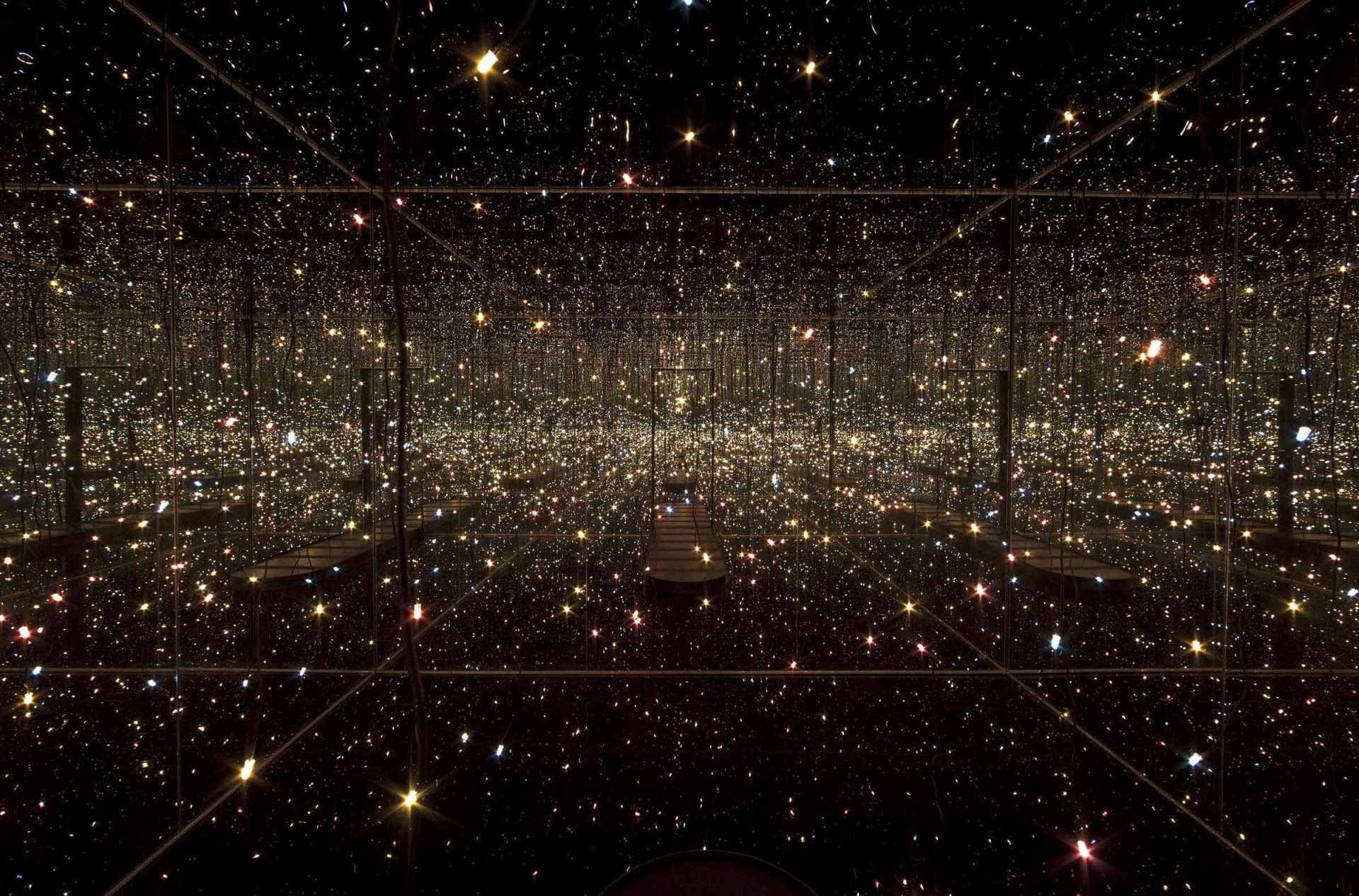
Fireflies on the water, made in 2002, hurls the onlooker into the perception of a dark space, surrounded by mirrors and cloaked in the glow of 150 glimmering lights, hanging from the ceiling, bringing a sudden stillness to the recesses of the subconscious.
As Kusama has always done: she draws one away, without realising it, without age limits or cultural patterns. She speaks a universal language, transferring sensations as in Archimedes’ communicating vessels.
In his Infinity Rooms he almost seems to be trying to
cancel individuality, multiply it, make it dissolve into a cosmic infinity.
The journey is in steps, as in Nolan’s Inception: the more you are willing to descend into yourself, the deeper and clearer things become.
And to this day, the thousands of people who enter Kusama’s room at Palazzo della Ragione leave touched by a magic wand
I like to read the comments left by people,” Raimondi continues, “everyone leaves a message and I see words of introspection, of comfort, of great humanity, because the installation touches those invisible chords that everyone has inside them, if they are willing to open up.

This is the first time that a work by Kusama has been housed in a non-museum site. How did you do it?
Thanks to the quality of the work that The Blank, an association I founded 13 years ago and organiser of the exhibition, has done over time and to the trust placed in us by the Whitney Museum of American Art in New York, owner and lender of Fireflies on the Water.
When we decided to bring her here, we did not know that Vuitton would soon collaborate with Kusama and use her pois all over the world.
Likewise, we would not have imagined such a great response: although we have already extended the exhibition and extended the opening hours, we receive thousands of requests from those who could not find a place.
Speaking of pumpkins, why did Kusama use them in her visual alchemy?Kusama was born into a wealthy family of seed traders and the pumpkin appeared in her imagination as a child. She explained its use in her works with these words: ‘I love pumpkins for their humorous shape, warm feeling and human-like quality’.
Why is Kusama so popular? According to The Art Newspaper magazine, she is the world’s most popular artist…
There is something magical in his works that reaches us all, regardless of our age or passion for art. It is a precious gift to be able to create and convey such vivid feelings and emotions.
Kusama represents everything our contemporaries face: she is a female artist who turned her psychic discomfort into art, she left Japan after the war and emerged in a purely male and macho environment, she has known success and failure but has always been true to herself and her art.
The title, Infinite Present, is very eloquent, reflecting the feelings: who found it?
It is the result of a fruitful discussion with Kusama’s studio, which is very meticulous and attentive, we discussed and collaborated on every aspect of the exhibition, we wanted both the temporal concept and the physical and spatial concept to emerge in the title. The part that precedes and follows the Infinity Mirror Room is very important, there are documents, books, images and a poem that Kusama wrote during the pandemic, which echoes significantly in Bergamo. We were also able to find a quotation for which the studio did not know the source, as it was taken from an interview done during Kusama’s Italian period in ’66.

Didn’t Kusama attend the Venice Biennale in ’66?
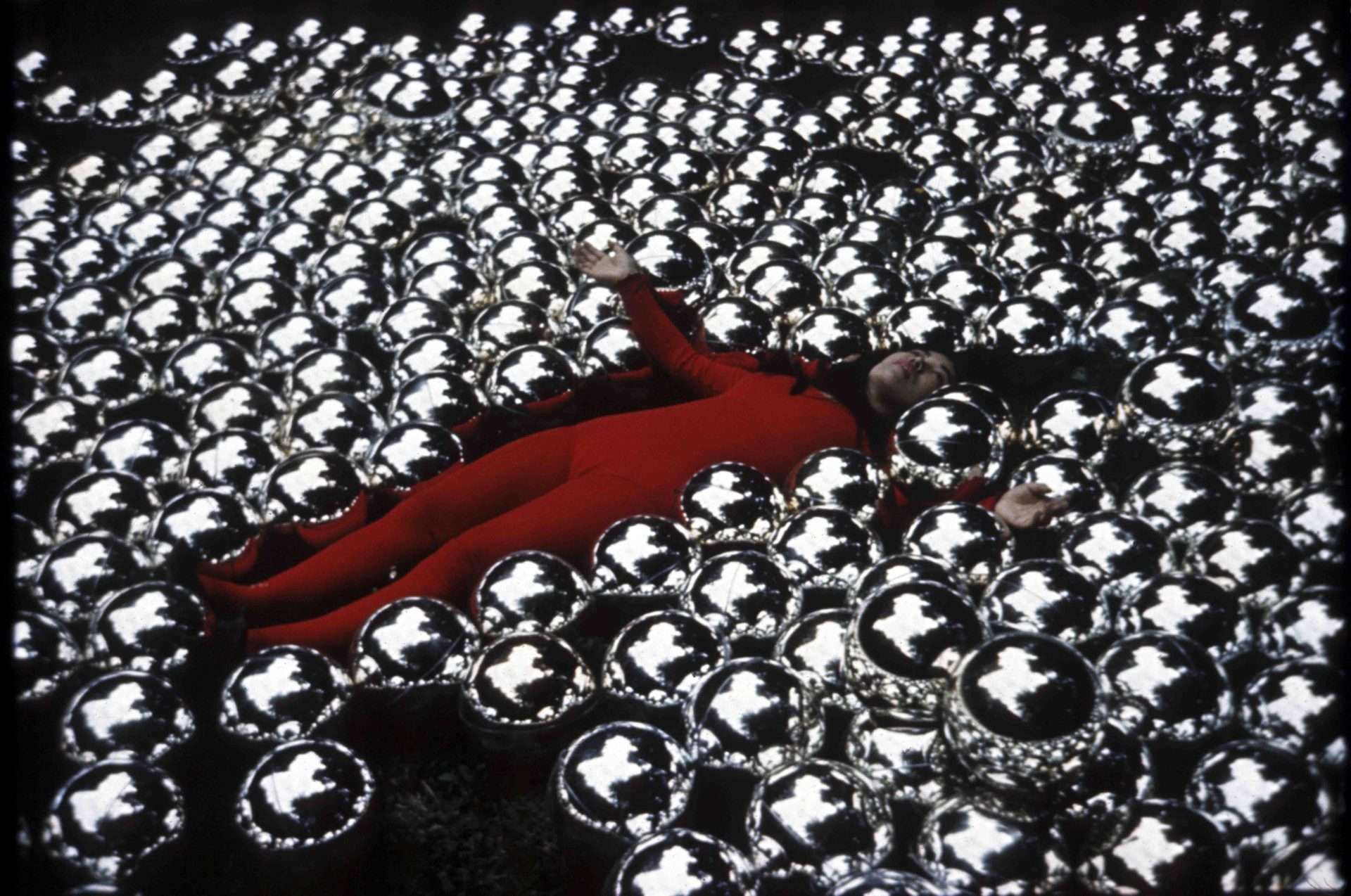
Yes, he was present at the Biennale, but without an official invitation, with his marvellous Narcissus Garden, consisting of 1500 reflecting spheres. However, not everyone knows that she was a guest of Lucio Fontana and that he financed the work for the Biennale.
Her interest in materials, such as plastic, which was not yet used extensively in art, emerges in the interview during this period.
Here again, Kusama gave a subliminal, profound message, urging people to mirror themselves in the refraction of themselves, with the multiplication that resets, finally, liquefies the ego, reuniting man with his surroundings.
In fact, at the Biennale she had put up a sign saying ‘$2 – your narcissism for sale’.
How did she end up in America?
It was the post-war period and she was attracted by the books of Georgia O’Keeffe, a great American artist. She wrote to her expressing her desire to go to New York. O’Keeffe initially dissuaded her but Kusama’s tenacity soon made it clear that she would not give up. So she left, had her first exhibition in Boston and then landed in New York, where she first climbed the Empire State Building, declaring that she would “conquer” that city.
At first, as a woman and immigrant in New York, she did not find life easy, but later on, with her irreverent works and performances, she managed to win everyone over.
Desecrating, how much?
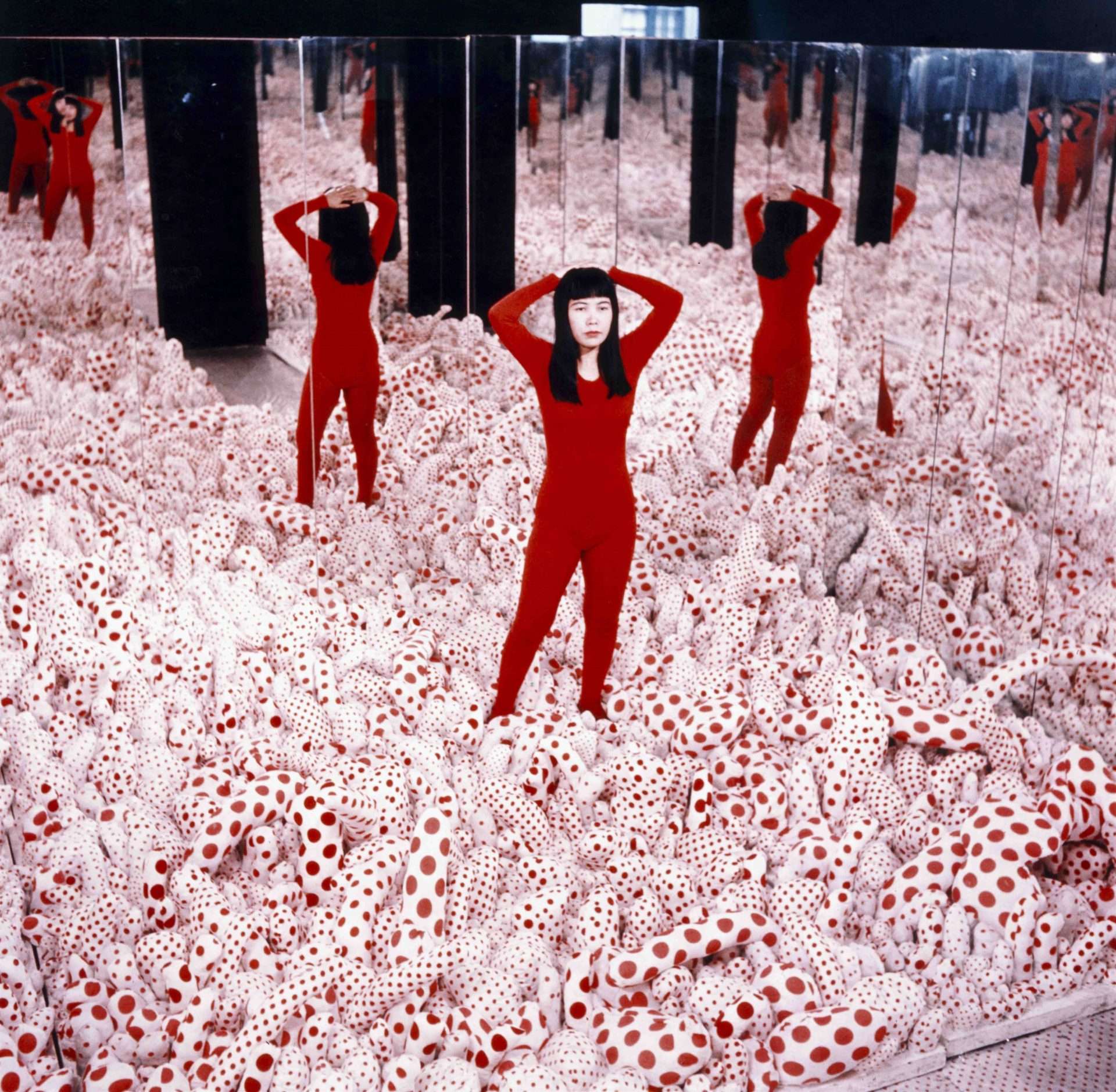
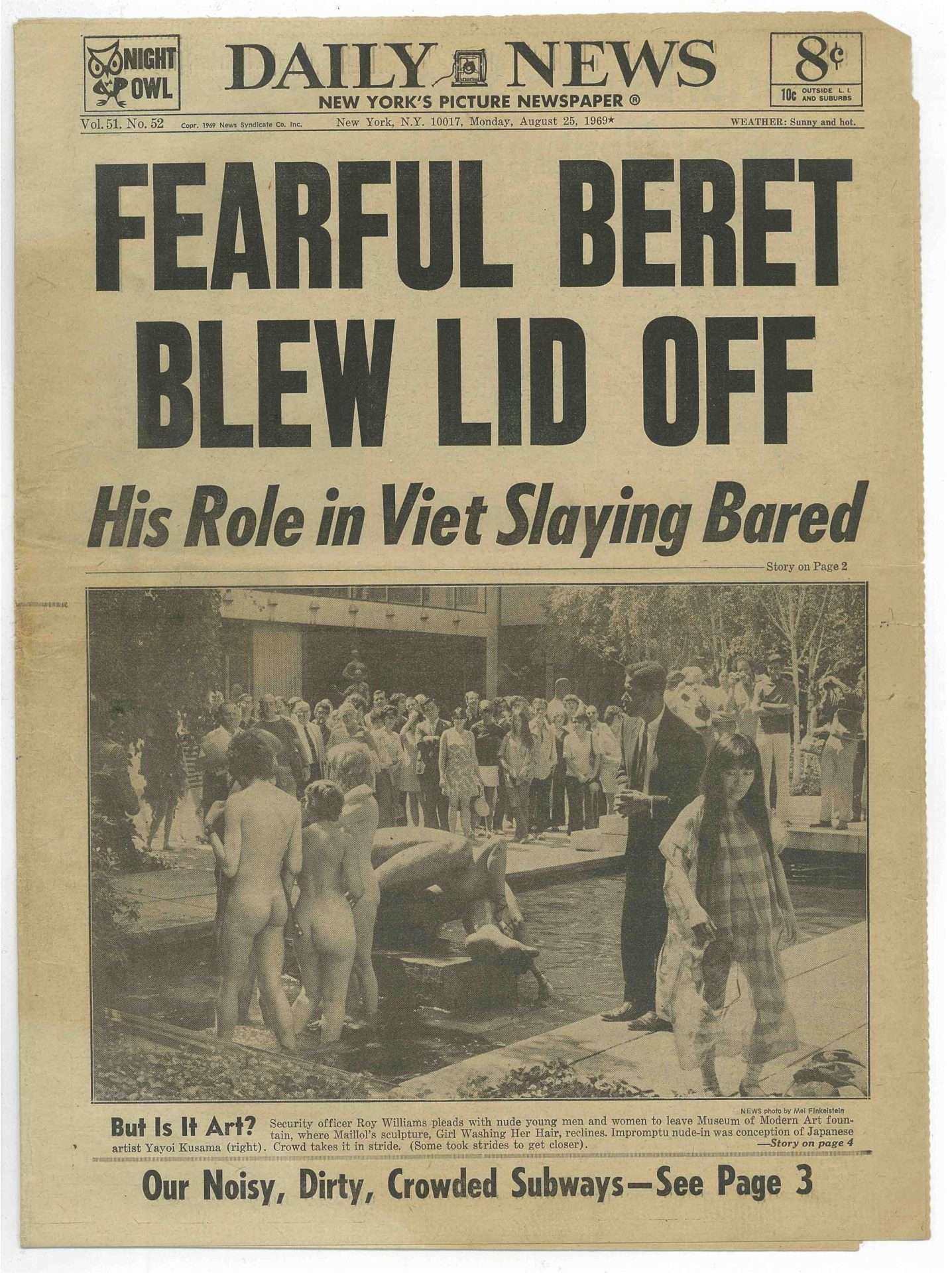
Quite a lot. Bear in mind that to ‘wake the dead’ at MoMA (Museum of Modern Art) she staged a performance where sculptures were used as in a bacchanal, a kind of orgiastic ritual. At this time Kusama was at the height of her success. She even founded the Kusama Fashion Institute where sensual clothes were designed and used during performances…but the paradox is that she had a revulsion for the sexual sphere.
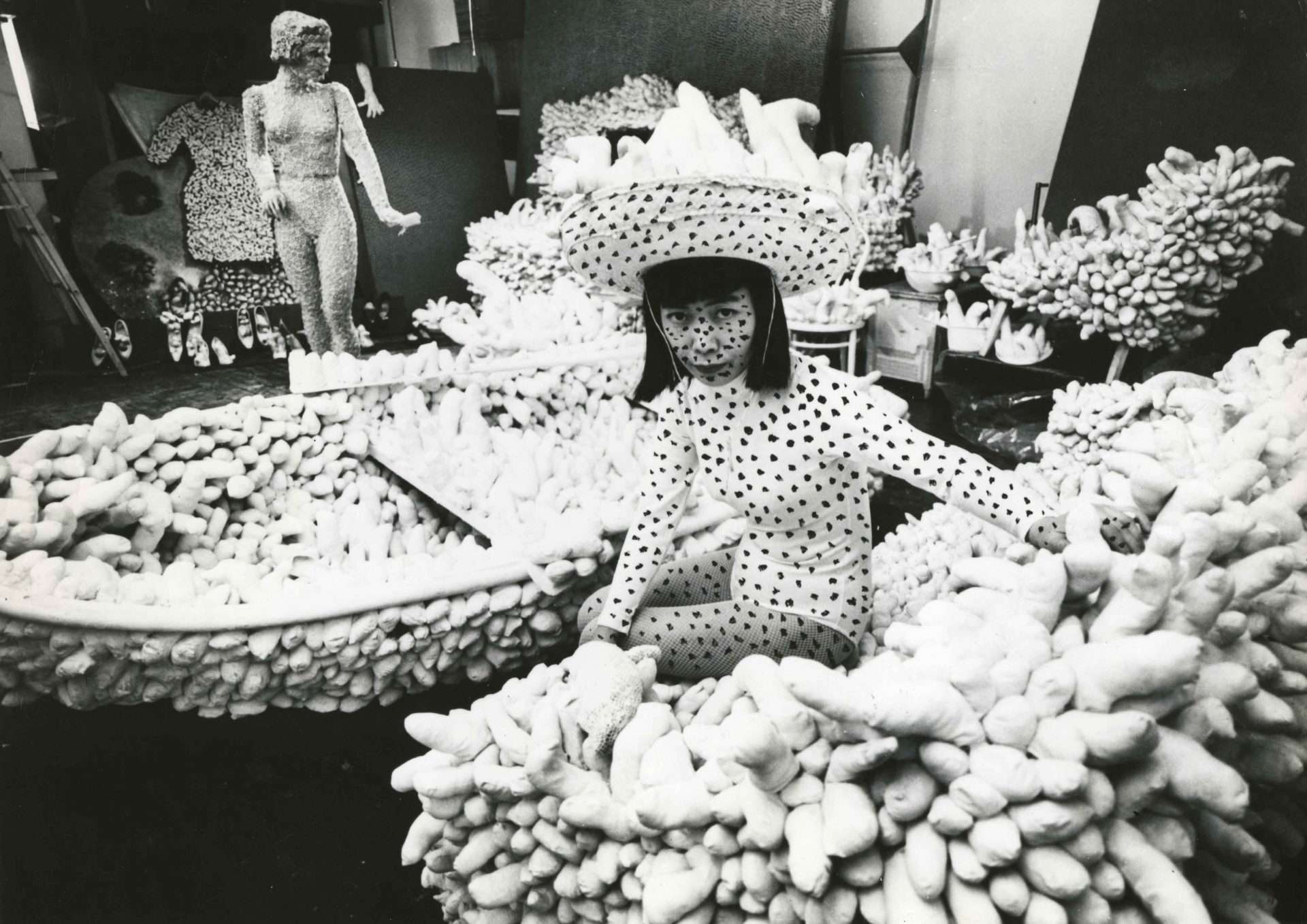
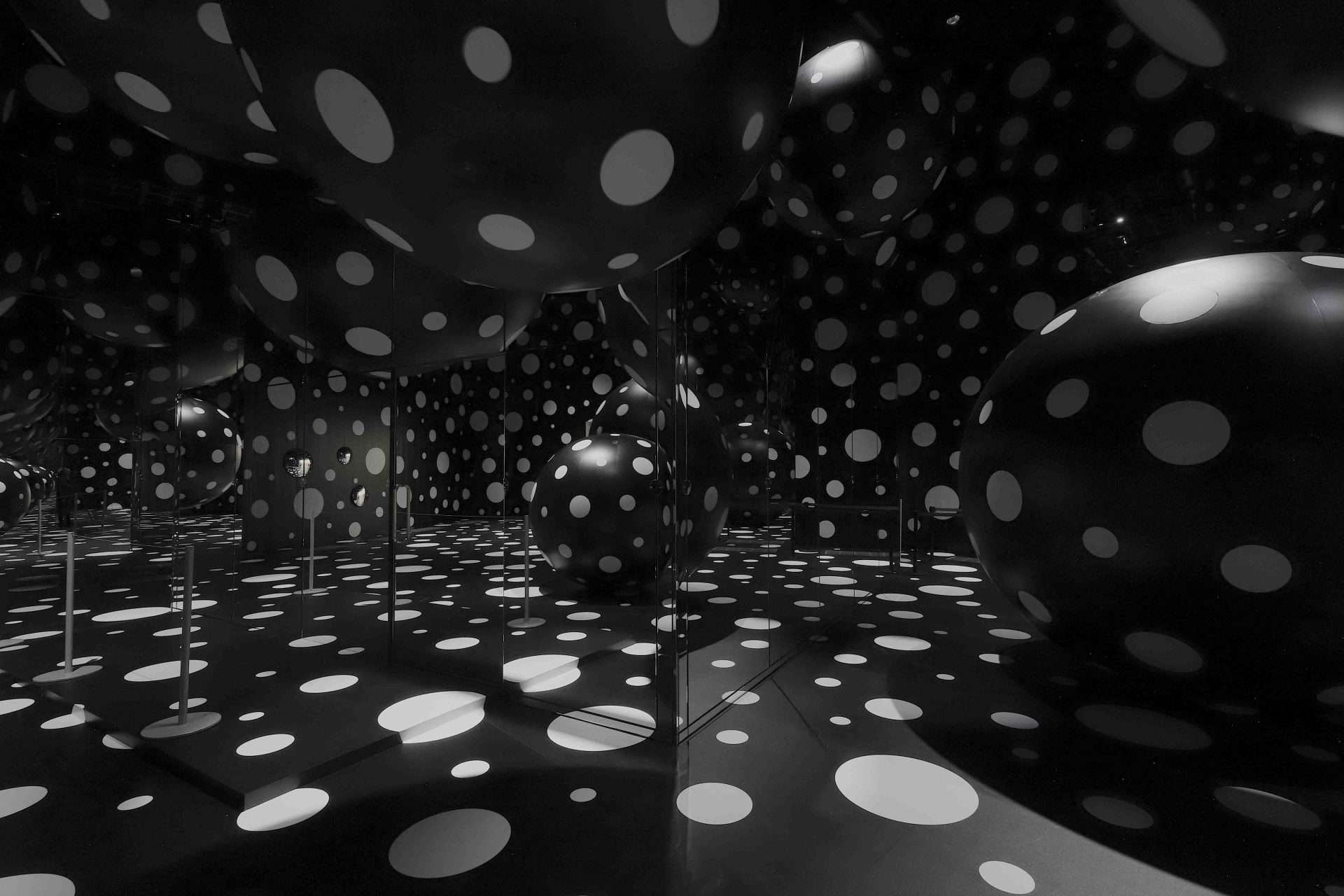
His first infinity room, from ’65, was an expanse of dotted phalluses, ‘Phalli’s Field’. It was her way of exorcising her fear of sex.
Where did this fear come from?
From childhood. Apparently her mother sent her to spy on her father who was cheating on her. Before the Infinity Room, this uneasiness of hers had been expressed and obliterated in the famous Sex Obsession series where she literally covered domestic objects – chairs, stairs, cupboards or even a small wooden boat with phalluses. This process of accumulation and repetition allowed her to arrive at what Kusama calls “obliteration”, a process of detachment and annihilation of the ego and its fears.
Did she self-enclose herself after the American experience?
After the great success of the 1960s, a period of critical downturn followed, also due to the changed cultural climate. Kusama returned to Japan in 1973 and a few years later decided to self-enclose herself in the Tokyo psychiatric hospital, a protected place that allowed her to devote herself with great intensity to art but also to literature. These were the years of her first novels.
What about the Infinity Rooms?
Since the one made in 1965, more than 30 years passed before Kusama created another Infinity Room.
Fireflies in the Water is the first that introduces the natural element of water and perfectly expresses how this type of work has become not just a way to cancel out one’s anxieties, but rather a universal message of tranquillity and introspection, a serene setting that even in its title refers us to a poetic summer evening.
So we have you to thank for this wonder?
More than being thanked, I am pleased to know that over these months, thanks to the enormous work done by The Blank, the generosity of the Whitney Museum and Kusama’s studio, the City of Bergamo, and sponsors all, it is possible to enter and experience this work that takes us to another space and another time.


