

Denis Curti tells his story: an interview that reveals the invisible role of the curator, the voice-over capable of transforming images into powerful narratives
Written by Monica Camozzi
Photos by Simone Angarano
Decoding reality is easier when we are accompanied by the gaze of the narrator who turns the lights on the dark areas, helps us to understand it all and immerses us in the soul of things, giving us a hundred eyes and enhancing our senses.
The curator, in a way, is the voice-over. The thought that builds, like a spider’s web, its Archimedes spirals to capture our emotions, harnessed in the narrative.
Denis Curti, with the passion of the narrative voice, was born.
His curriculum takes up a considerable amount of space and brings back the meaning of the word,
artistic director of Photo Grant by Deloitte, founder of the Still gallery in Milan, curator of the first Sotheby’s photo auctions of the Stanze della Fotografia, director of the Italian photography foundation in Turin, consultant of the Venice foundation and artistic director of the Casa dei Tre Oci, to name but a few. The names of his curatorships are mind-boggling: Cartier-Bresson, Robert Capa, Gianni Berengo Gardin, Helmut Newton, David LaChapelle, Franco Fontana… and we could go on for minutes.
His book ‘The Hundred Photographs that Shook the World’ is marvellous, capable of making you grasp the narrative power of the image, not occluded by the narrowness of the word but free to create infinite universes in the beholder. More incisive than an essay, more eloquent than an encyclical.
The question naturally arises: how does someone become…you?
I did not attend ‘curator’ school, mine was a field interest and my basic training was in any case related to art. I started in a simple way, organising exhibitions in alternative venues in the 1980s.
The ones advertised on posters attached to shop windows?
Yes, it was one of those posters that attracted the attention of Daniela Palazzoli, an important critic. She called me, came to visit me at home and asked me to put together a group of young photographers that I thought were good. I put together the portfolio and I think she was positively impressed because she invited me to curate the young section of the Biennale of Photography in Turin.

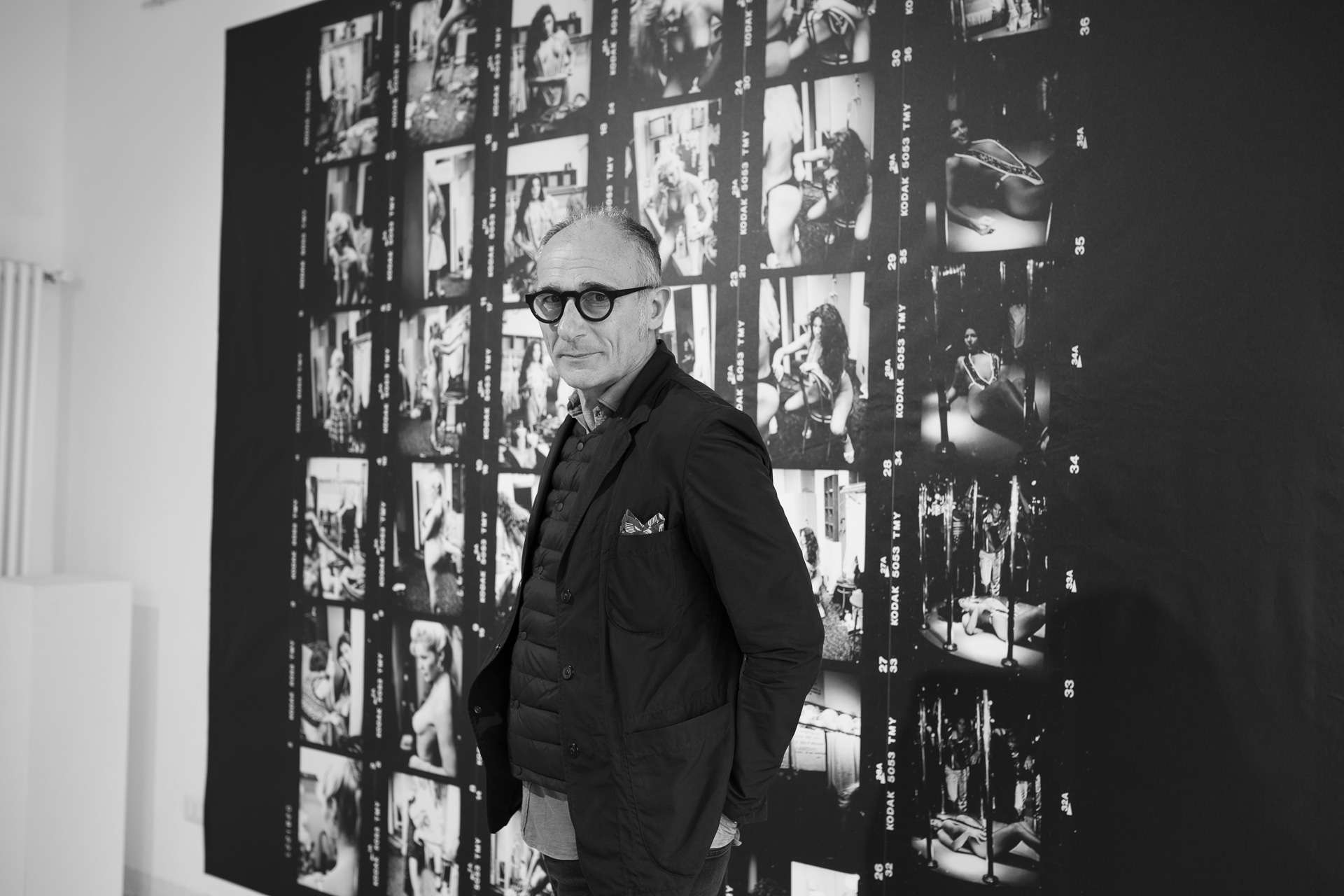
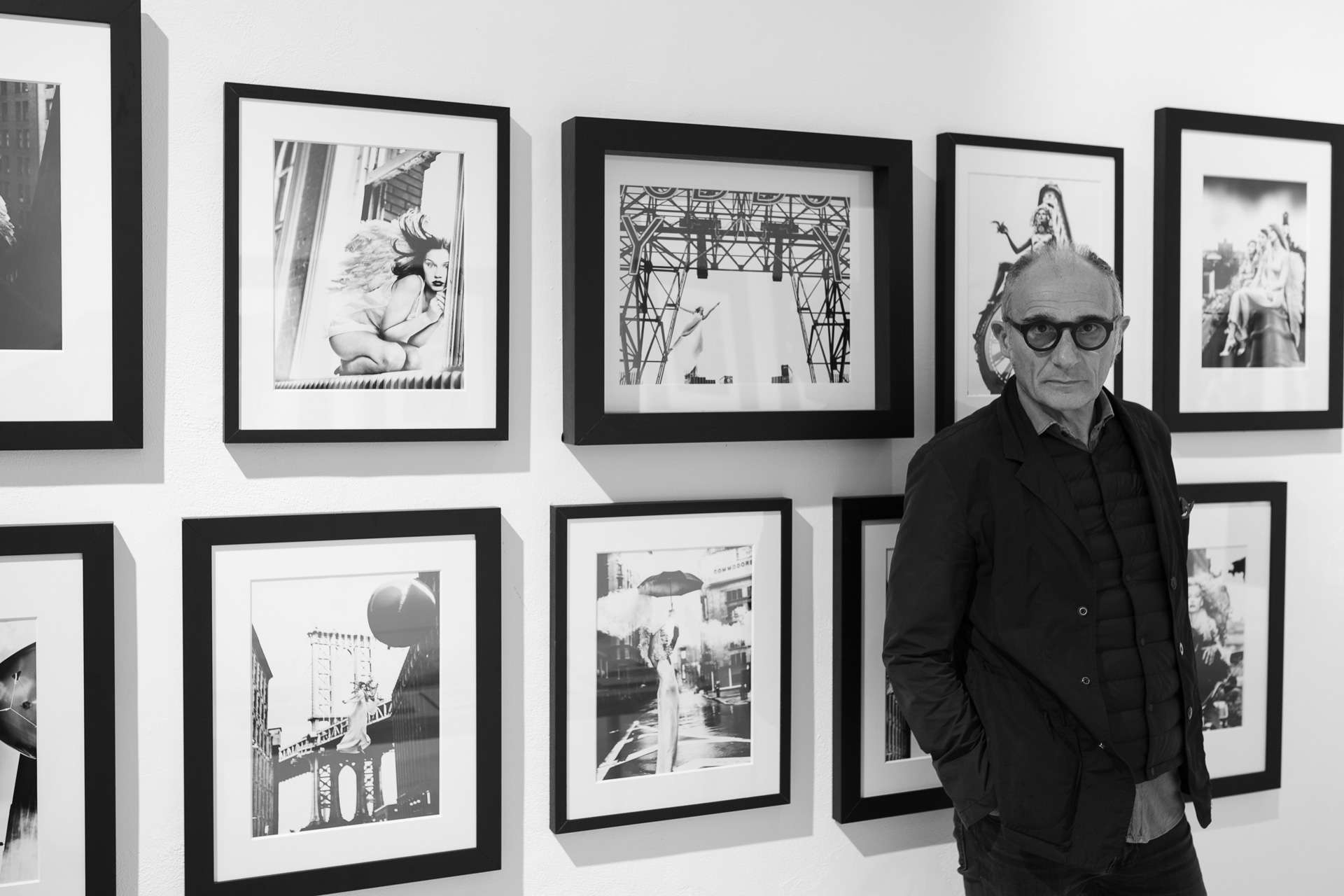
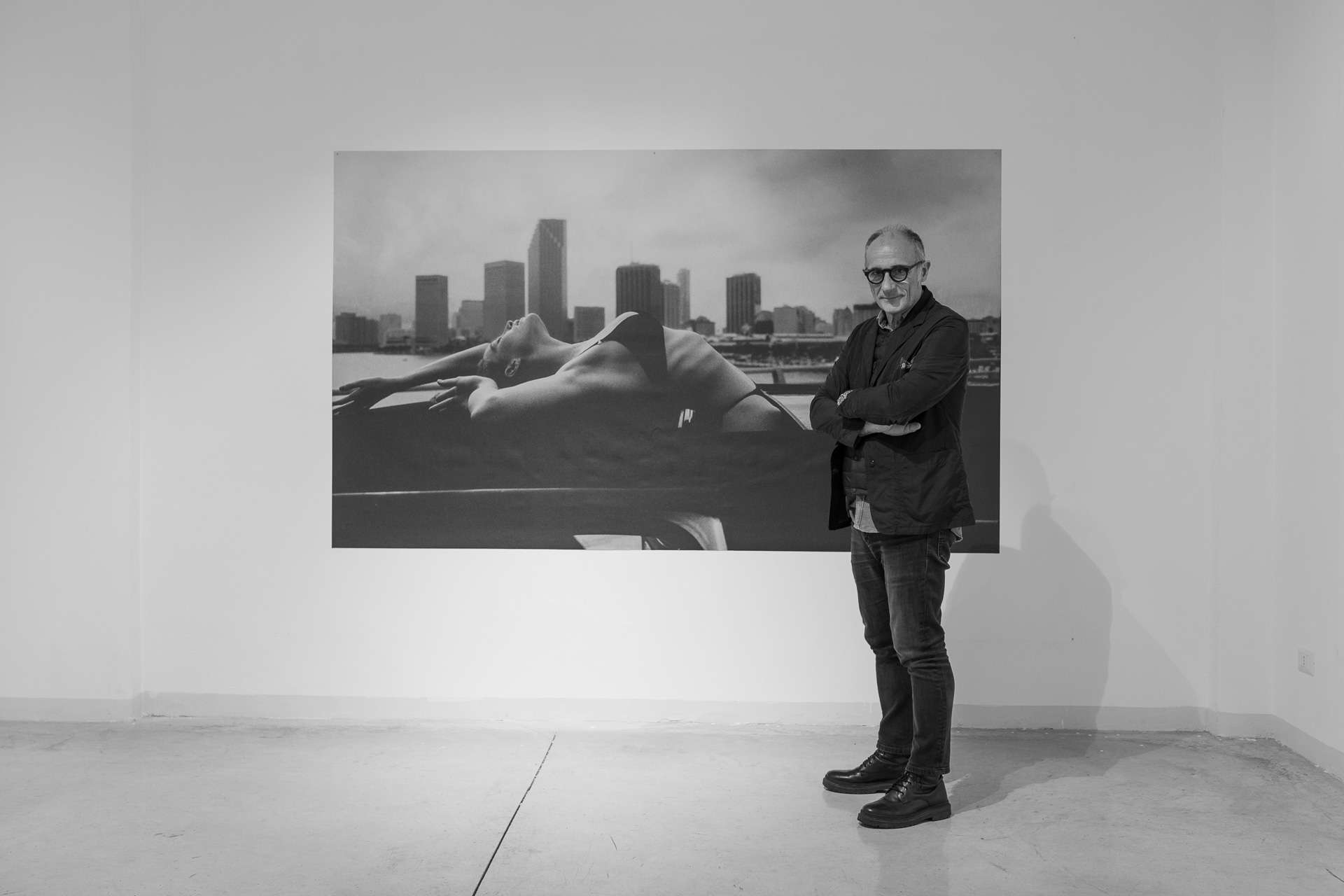
So is an insane passion for culture enough?
In my personal case, I had two huge interests: curiosity about the history of photography and writing. I read and wrote. In fact, I used to write photo stories for a living and this gave me crazy discipline. The story had to be told with a hundred frames. It was a school that gave me the discipline of synthesis. I signed myself Riccardo Giri, my personal translation of Richard Gere.
And after Riccardo Giri (Richard Gere) what happened?
I started reviewing exhibitions for Corriere della Sera’s Vivimilano. Those were times when, in the absence of the Internet, you had to look in books. I put together about 7,000 volumes.
Is there a method in curatorship?
No. It has to do with your sensitivity, with what you want to tell.
Is there an objective beauty?
The concept of beauty in art – and therefore also in photography – is outdated. I was not looking for beautiful pictures in a figurative sense. I was looking for people who could give me their view of the world. Diane Arbus was able to make you see what your eyes could not grasp. There are things that I myself had never seen before I photographed them.
What does it mean to photograph?
To watch a second time, to recognise. Cesare Pavese explained the process of recognition well, we only see what we know. There, things begin to belong to you.
What influence does the editor have on an author’s success?
It is a job comparable to a director. He has the role of a translator who listens, tunes in, ‘dresses’ the exhibition and sequences the images as if they were a short film. I have in mind the exhibition display into which images, words, lights enter. You are a narrator, sometimes a megaphone. Or you may come across authors who are so aware of their work that they have it all figured out and you have to work alongside them.
Among the authors you have followed is David LaChapelle, what was it like working with him?
The spectacular thing is that he reconstructs everything. When I went to visit him in LA, I found myself in a two-thousand metre studio: he turned part of it into a pond, to take the picture of the flood, with the carcass of a car on the 12-metre seabed and 32 undressed people in the water. For one photo he takes a month. The only problem with him is metaphors.
The metaphors?
When I came back and wrote lyrics and we Italians love the use of metaphor while Americans hate it (laughs). I had metaphorically described him as a castaway finding new territories and he said “but I have never been castaway in my life”. It becomes a language problem but it’s fun, you have to connect.
Have you always succeeded?
I have always sought a relationship with artists, but it is not always possible: in the case of Newton, when I curated the exhibition in Rome, it was a person who is no longer living. In that case the curator immerses himself in the archive and tries to discover everything he can.
What did you find out about Newton?
His obsession with crime stories, made of consecutive passages. He had so many crime magazines, his little notebooks with photos stuck in them. I saw the book, called Yellow Pages, his homage to black. When he could he would recreate images inspired by black, it was his obsession,” he said. For Newton, at the Ara Pacis, we had over 60,000 visitors.
Is photography art?
Today, photographers, because of their function as readers of the world, are taken into consideration in the same way as other intellectuals and artists.
So many authors are universally considered artists, I am thinking of Scianna, Berengo Gardin, Toscani, LaChapelle. It annoys me that in the global art market, made up of auctions of watches, paintings, stamps, photography is worth 1%. A Picasso painting sells for 150 million, the most expensive photo for 5.
Fortunately, there are specialised fairs or initiatives like Paris Photo or Photo London or Ipad New York that value it as a work of art.
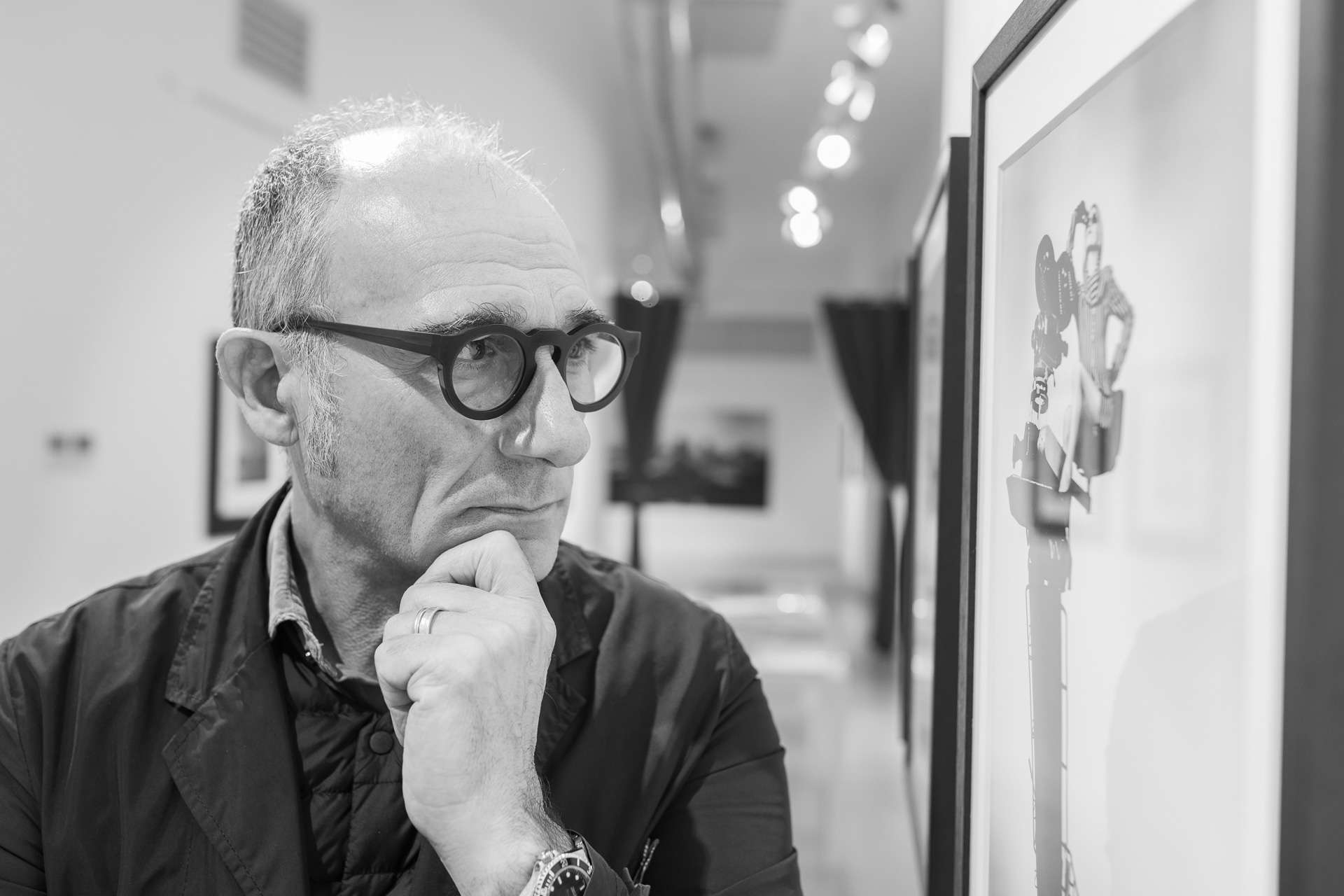
What market is there in photographic collecting? What does an enthusiast collect in this field, for the most part?
In photography there is a fear of not knowing how many copies there are of that specimen.
Many collectors buy analogue photos, while contemporary art collectors have no problem buying digital works.
There is a split: some artists use photography but do not consider themselves photographers, then there are photographers who have always done this and now enter the auction market.
Those who use photos as artists have higher prices and numbered editions. Working within the logic of the open edition brings the value down.
I understand it is a fast growing market, what is holding it back?Many new collectors have entered this market, thanks to the spread of NFT and crypto. Of course, we live in a time of great uncertainty between conflicts and inflationary fears. Then there are some elements that contribute to curb collecting: art is not a safe haven asset, it has fluidity that you cannot control. Also, if you buy a picture thinking of reselling it, you have to find someone who wants to buy it
I can’t help but ask your opinion on the use (and abuse) of AI in photography…
AI does not produce photos but images. As I said, for me a photographer can be defined as someone who gives a personal reading of the world. I have nothing against these images, but those who use AI cannot call themselves photographers, but rather producers of fantastic illustrations.
Among the things you are treating or discovering, is there one that particularly excites you?
Nowadays, photography is not only frequented by photographers. Photography is the right language to develop the narrative. I was struck by a group of women who are trying to redesign a new realism of identity. The medium of photography allows people to tell about themselves and their fears.
Attempts are made to elevate the nude to art, inspired by classicism, but it is always and in every case seen as ‘nude’ tout court, except in individual expressions magnified by the fashion world. What do you think?
I think of Robert Mapplethorpe who made the nude into an amazing art, years and years have passed and his images still disturb and make one think. He became famous because a senator went to the courtroom protesting with pictures of him in his hand.
He accused Moma of exhibiting his pictures, without realising that he was promoting it. Inside those nudes were seduction and poetry. Suffering, joy, the desire to exhibit. The important thing is to draw a perimeter: Mapplethorpe expresses himself boldly, there is perversion in his nudes, but awareness and inclusion coexist with it. One has to see case by case. When I see Catherine Opie I am not shocked, when I see Terry Richardson I become suspicious….


