
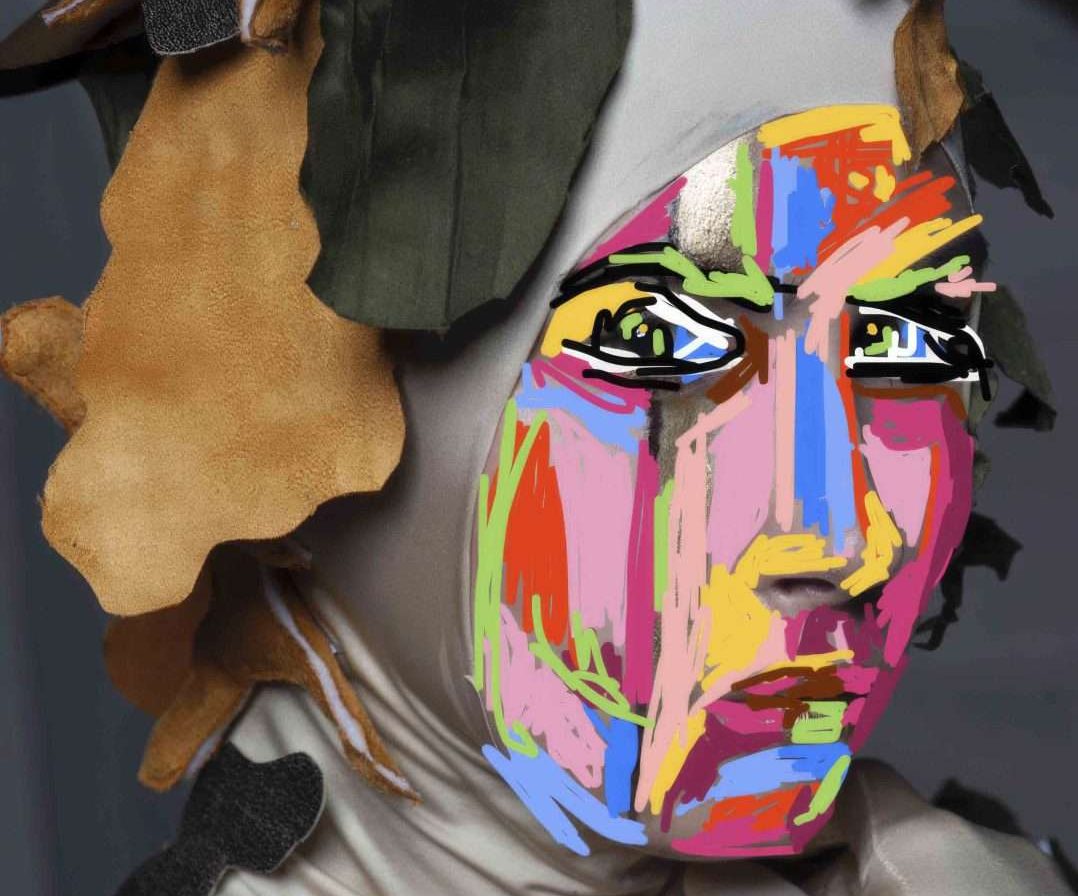
The art of fashion: the story of Faeze Mohammadi, emblem of integration and innovation
Written by Matteo Muzio
Great artistic journeys often begin in the protagonists’ bedrooms, engaged in the activity that will make them great in the future. This was also the story in Faeze Mohammadi’s case. In his case, however, the room was far away: in Hamedan, Iran, in 1990. Faeze wanted to become a painter at the time. Today, after a long journey that has seen her work as a journalist, fashion designer and seamstress at Gianni Molaro and Fendi’s atelier, she designs her own line of clothes and is concentrating particularly on the production of blouses. Her whole journey is very inspiring, so much so that it seems like a fairytale.
From those drawings in the room, she aspires to enter the academy of fine arts in Tehran, where she dreams of becoming a well-rounded artist.
What happens then Faeze?
Entering the academy is very difficult but I was still good and I placed 269th out of 132,000, on a national selection, but I was allowed to enter the only women’s university in the country, Alzahra University in Tehran, where I was admitted to attend a fashion course.
What did you think?
My parents wanted me to become a painter and I was also a bit hesitant, but I still decided to go ahead with this training.
Was it then that you discovered Italy?
Yes, a country famous for its art, craftsmanship and beauty. While studying fashion, I discovered the role that Milan, the capital of fashion, played. But I didn’t end up there straight away.
What did you do before?
I was first a translator and then a journalist in a state press agency. But I was precarious and working in close contact with the politics of my country was difficult and tiring. So I came to Italy in 2013, to the Brera Academy. And in 2016 I was recognised as the best student.
Was there much of an artistic aspect in your first collections that you designed as a freelancer?
Yes, they were very drawn, very conceptual,
I wanted to draw a bridge between East and West and overcome stereotypes.
I thought people in Europe were cold, with little emotion to express. Instead, we are very much alike.


In 2019, you then won with your drawing the opportunity to design the logo of the Altaroma event.
That was really a great achievement. For someone like me who has always drawn everywhere, even while on the metro, to see one of my works as the logo of such an important event gave me an important signal. I have to thank Simonetta Gianfelici for inviting me to do that design, inspired by an Arthur Arbesser dress. To realise it, I did a lot of research that I was already used to doing when I was a journalist. An effort that was also rewarded by the many compliments I received.
You got there after a long time…
Yes, for certain periods I also worked twelve hours a day, almost sixteen. But in the meantime I used to tell myself that I was beautiful (laughs) despite being tired and that I would soon be rich and famous.
And how did it go?
I am still in the process of building a new Faeze.
Yes, because in the meantime you had become iconic yourself
I had started to be invited on TV programmes such as Detto Fatto on Rai 2 or Tiki Taka Russia, where I was also noticed for my peculiar look: at the time I wore a veil and had a single eyebrow, according to Iranian beauty standards.
You have to explain this one better.
At the beginning of the 20th century in Persia, overweight women with very thick eyebrows were considered beautiful.
I also felt less comfortable when I changed my look, but now I feel better, more myself.


What does beauty mean to you?
I express myself poetically on this: it is a feeling that can touch your soul, that you feel with your heart.
It is a very deep and intense concept that is realised as when we meet pure and sincere souls who can convey joy and tenderness, and I want to convey these feelings through my creations.
And what are you doing now? What are your next projects?
Over the past few years, I have been working as a freelance designer and providing consultancy for several brands. In the meantime, I have created small collections of clothes that I sell at several boutiques in Italy, Monte Carlo and Iran. I design clothes for some TV personalities such as Rajae Bezzaz from Striscia la Notizia and,
for almost a year now, I have been launching a line of haute couture shirts made from natural fabrics.
I have given a practical twist to my artistic sensibility by making garments that are easier to wear. For the future I want the Faeze Moda brand to become known, for me to open my own atelier and open new boutiques around Italy, a country of which I want to become a citizen soon.


