
2.1K
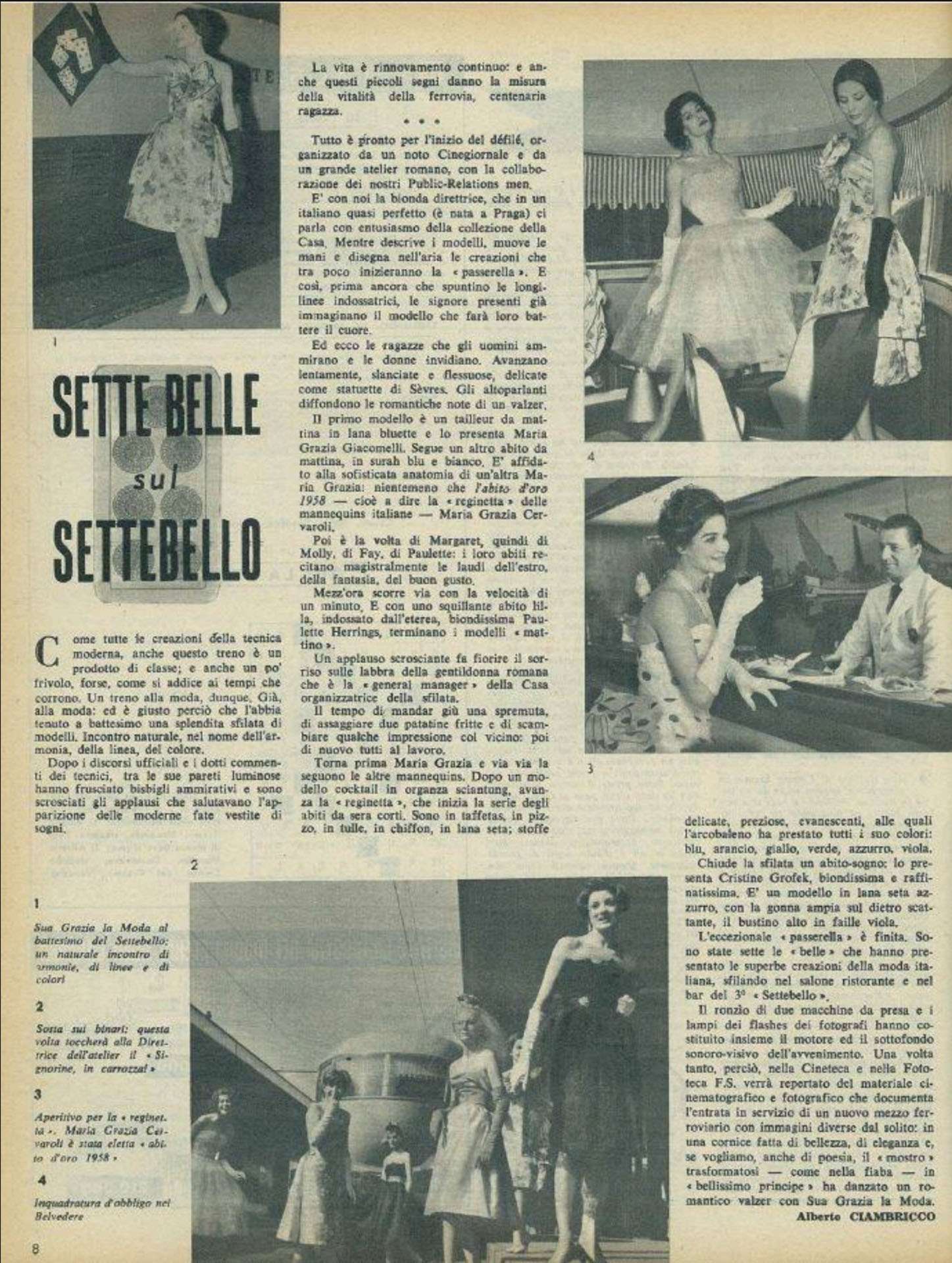
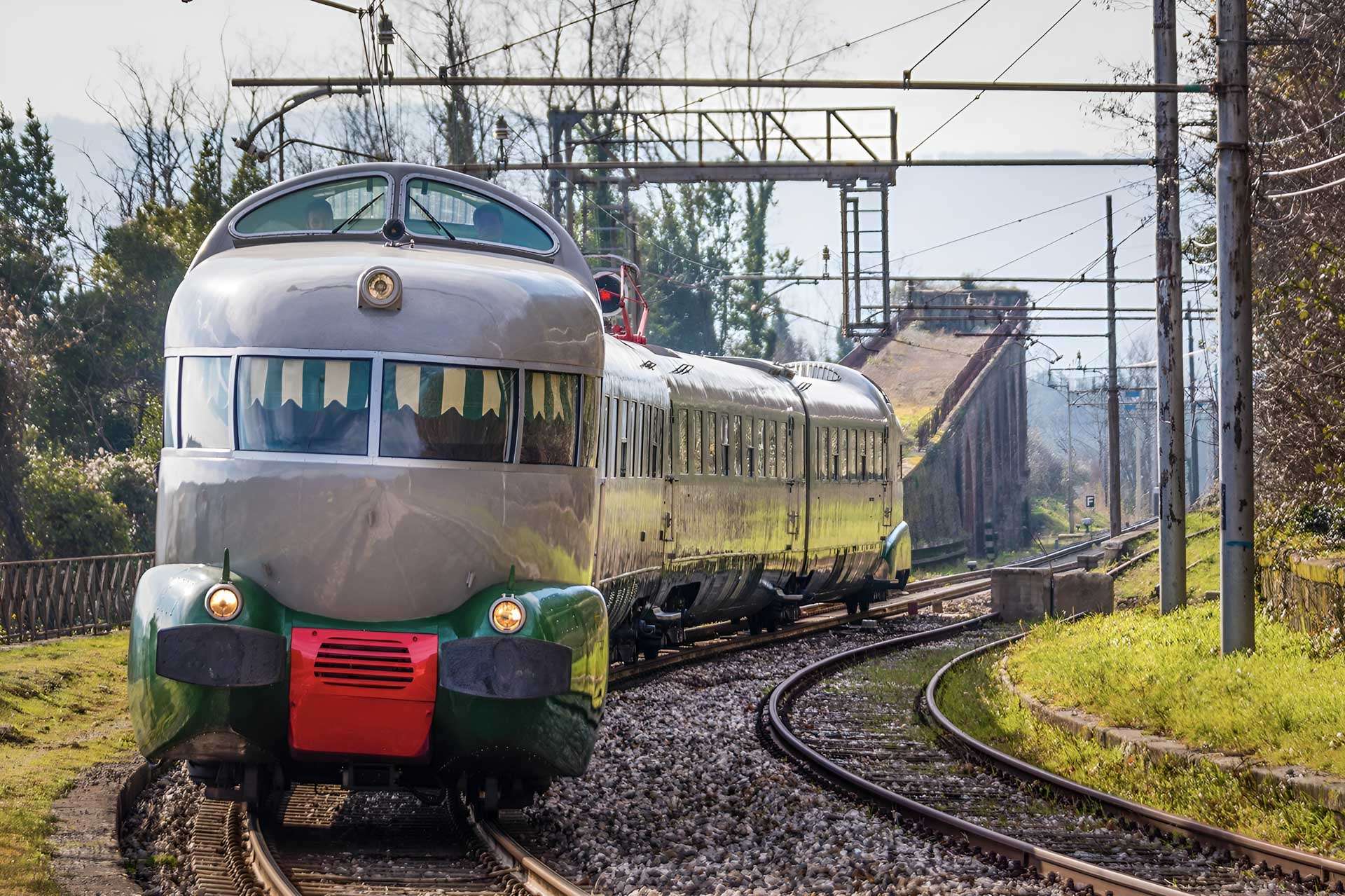
A cura di Davide Pizzi Photos by Archivio Fondazione FS Italiane e Archivio Breda Those who, like me, were children in the 1980s, have in a memory drawer the iconic scene from a film where a small crowd of peasants gathers in front of the railway tracks, waiting in admiration for a train to pass by. A nice and amusing hyperbole to underline the desire for modernity and the future that the previous generation was hungry for, for whom modernity and the future were a luxury for a select few. The train represented the future passing by, within everyone’s reach. In a world that nowadays seems light years away from that of the country boy, it is difficult to see the train as the symbol of progress, but there was a time when this means of transport really seemed to be able to take us into tomorrow, and moreover with a good dose of style and elegance. The leader of these trains with futuristic and innovative appeal was called the ETR 300, or as it was affectionately called by those who built it, the Settebello. The ETR (which stands for Elettro Treno Rapido) project was born in the immediate post-war period, when Italy’s desire for revenge was strong, but the economic boom had not yet arrived.  These were fixed configuration trainsets of 8 carriages, with a maximum of 190 seats, 23 seats per carriage, just to give an idea of how much The Settebello populated like a palace on rails, actors, personalities and heads of state boarded, conferences, events, fashion shows, readings and vernissages took place, and the best chefs of the time with their brigades took turns in the on-board restaurant. Even married couples even choose it for their honeymoon, captivated by ‘that mechanical miracle that harmoniously blends metals and crystals and looks like a travelling salon and runs like the wind on steel rulers (from the historical magazine – Voci della Rotaia)’.. The ETR 300 retained its supremacy as the flagship of the Italian train fleet until the mid-1970s, when the new generation of FS Grand Comfort trains was built, and remained in active service until 1984. In the early 1990s the trainsets underwent a tacky and botched restyling, to adapt them for intercity use, but the architects in charge did not have the stuff of Giò Ponti, and the intention was more to maximise passenger transport than to offer a travel experience on a par with the Settebello. As usual, we are our own best saboteurs, and so in 2004 the few ETR 300s and 250s still in service for tourist routes are sent to the depot, where they are left to decay and be vandalised. The original furnishings, stored at the FS’s Bologna workshops with a view to potential restoration, were sent for demolition,
It was a project created at the BREDA industries,very expensive and where a great deal of high technology was pushed to create a high-speed convoy with certain comforts that seemed impossible at the time.
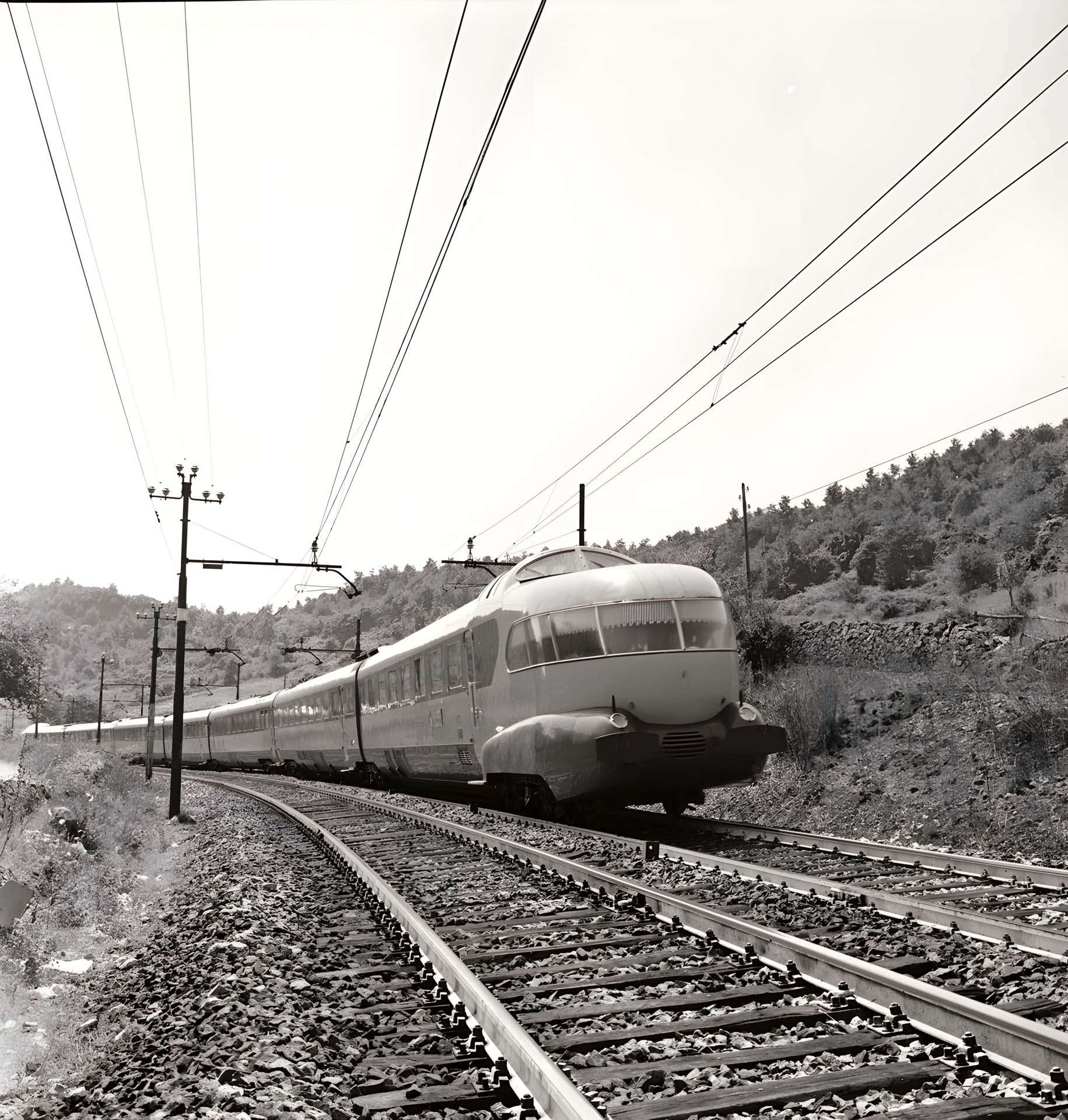
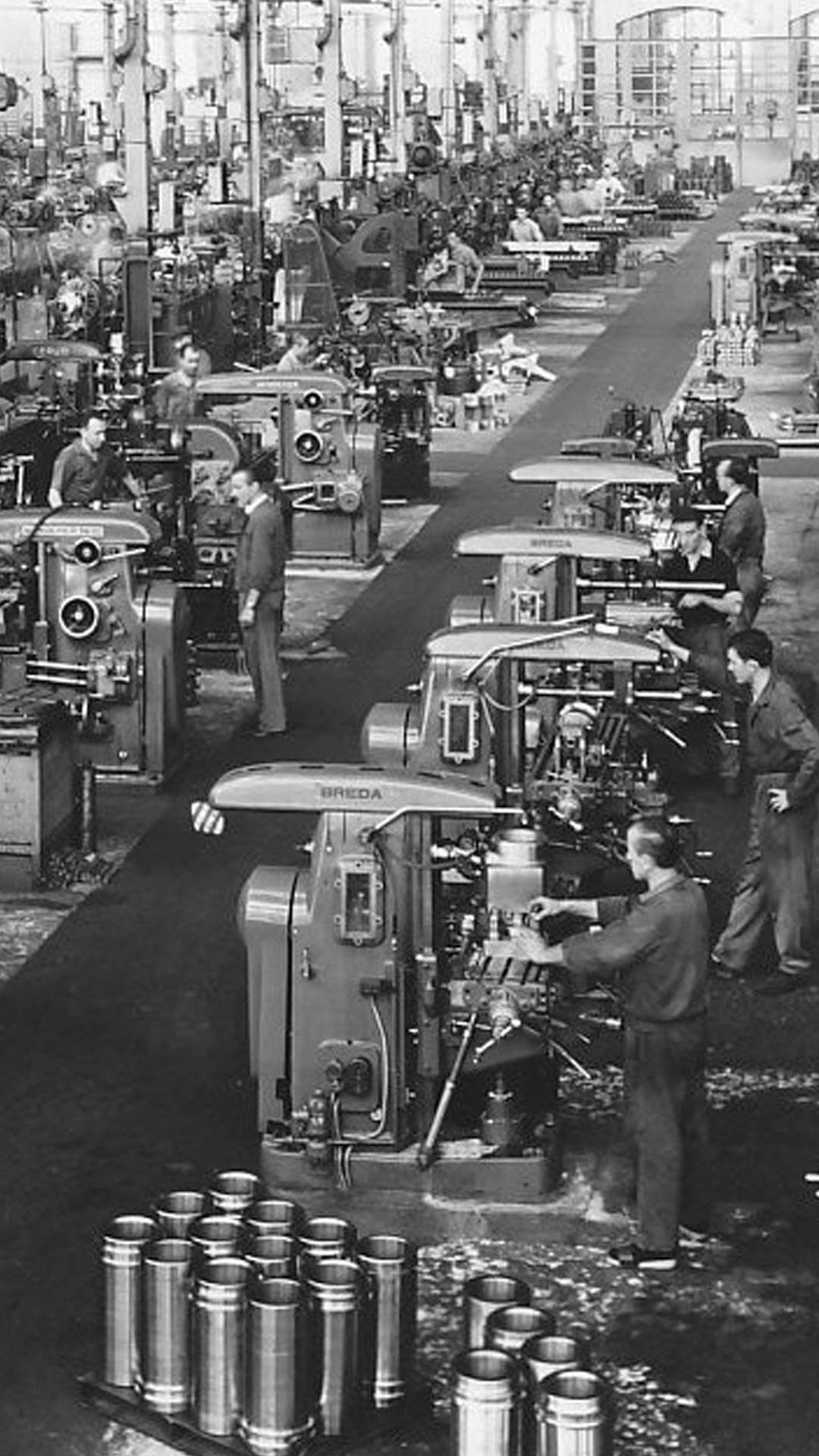
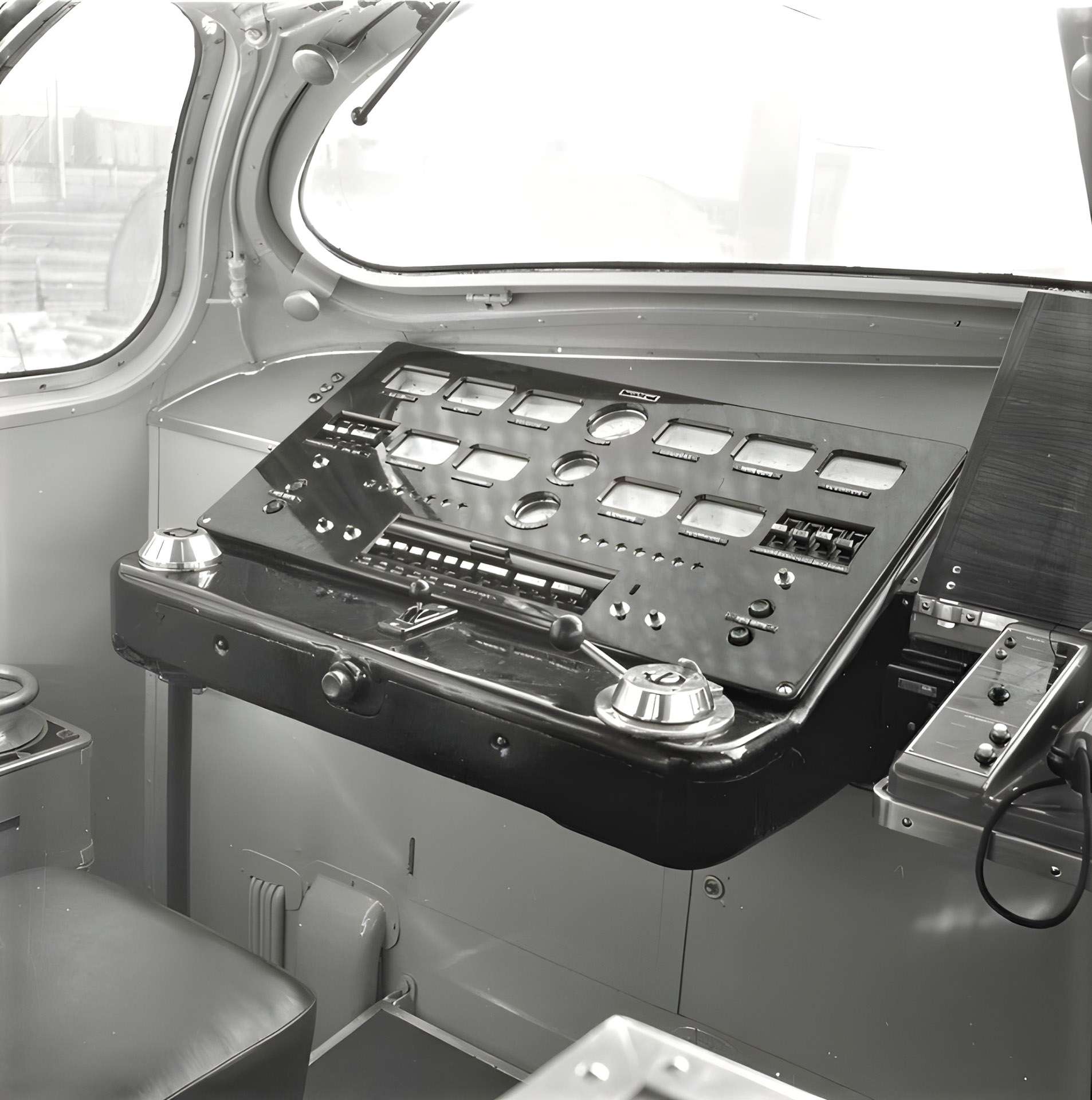


the logic behind the project was the welfare of the passengers and not to move as many people as possible.The train’s performance in terms of sheer speed (200km/h) was twice as fast as other locomotives in circulation at the time, made possible by the never-before-used three-phase electric traction power supply technique, offering a truly exclusive service, like a concorde on rails. Its punctuality was so famous that passengers were said to set their watches on its passage to get the exact time. Everything had to contribute to creating that wow effect, to which Italians and Italy were still not accustomed.. The design of the interior spaces was entrusted to urban planner Giulio Minoletti, who worked on a regular basis with Breda Industries and was familiar with the interior design of trains and aircraft. To give extra care to the aesthetics of the carriages,
the great architect and designer Giò Ponti was called in,who followed the interior fittings of all areas, from the lounges and second-class carriages to the luxurious restaurant in the middle of the train. The wheels were fitted with a futuristic anti-vibration system, which made the journey much quieter and more comfortable, by the standard of the times of course. The exterior aesthetics of the convoys, especially in the nose, was reminiscent of the jet planes of the time, and was meant to inspire a sense of the avant-garde, of speed and progress. But it also had a practical function for first-class passengers.

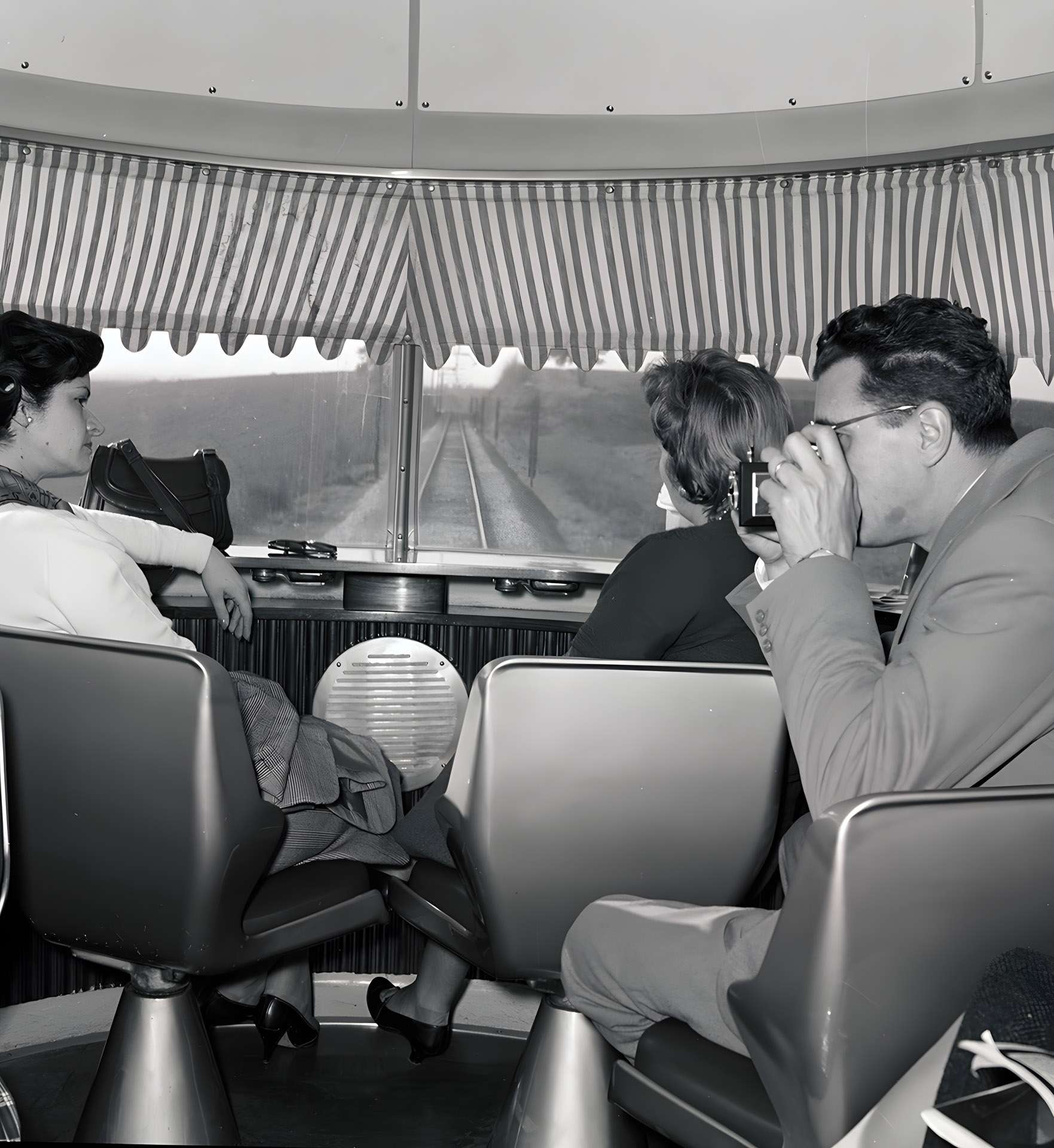


which offered guests the chance to enjoy the scenery through large windows, moving the driver’s cab to a hidden position above the lounge itself. Each carriage was divided into two compartments of 11 seats, with armchairs, lounges, sofas and a telephone, a detail never seen on a train. Of course, every luxury has to be paid for. Train tickets cost on average twice as much as any other ticket before, and controversy was not long in coming. In an Italy still licking its wounds from the war, all this luxury and glitz, all this technology, was not understood. In fact, the ETR 300 was not a great success at first. It was much loved by those who designed and built it, even the workers who gave it its name were proud of it. But for the Italians, the construction costs, the cost of tickets, and that feeling of psychological inferiority that still hovered in the 1950s, in the aftermath of a lost war, did not get this dream on wheels off the ground. On the horizon, however, was the economic boom of the 1960s, the desire for revenge and the realisation that in the field of design and engineering we could become the top of the class, and indeed that we already held some trump cards. Little by little, with this change of mentality,It was indeed designed to accommodate a small lounge known as a ‘Belvedere’,
that train becomes a myth, a status symbol.
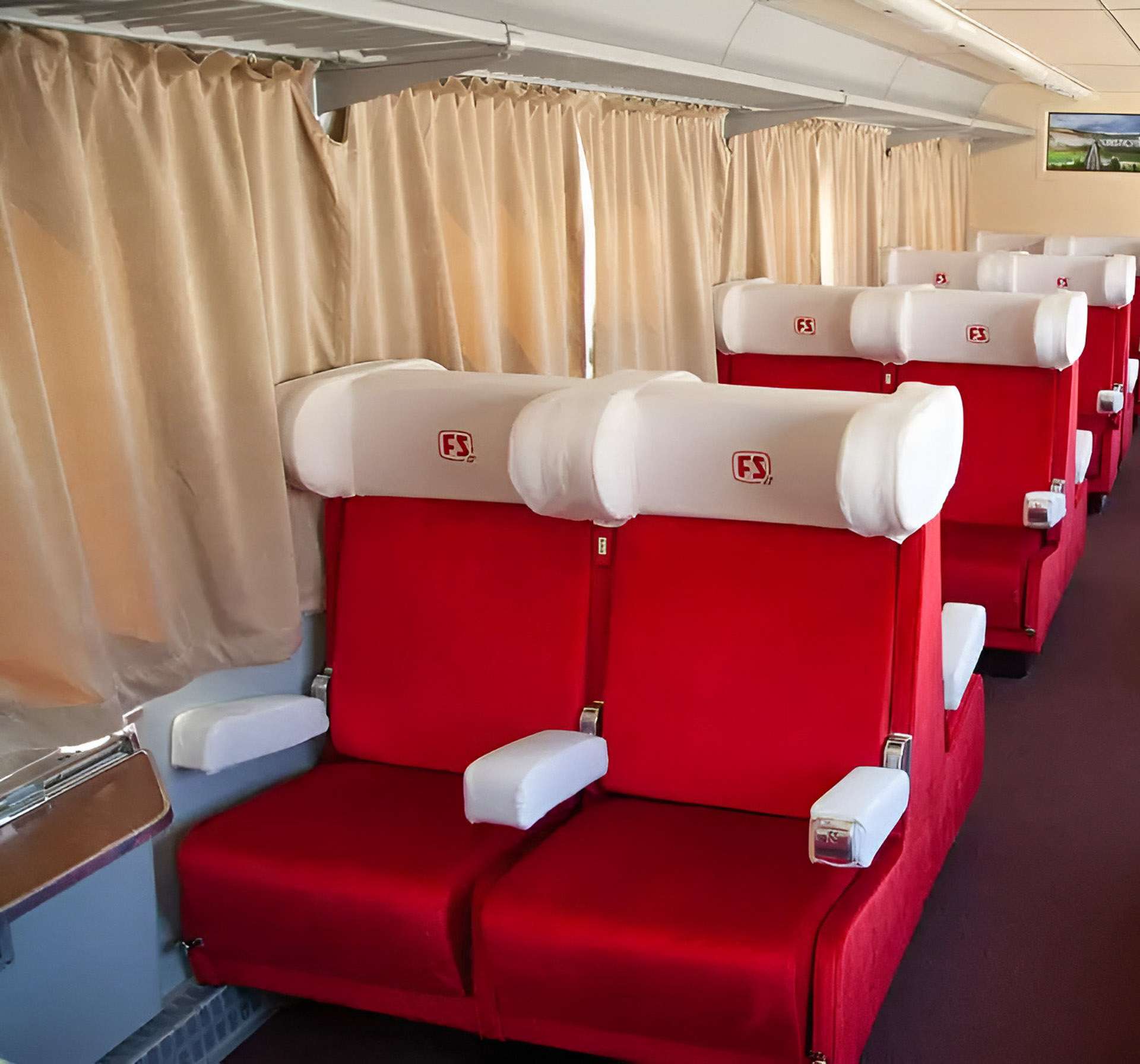

destroying an extremely valuable piece of Italian design.Only in 2016, a project to restore the Settebello to its original 1950s configuration was approved by the Ministry of Transport and the FS Foundation. The 13-million-euro tender was awarded to the Oms-Officine Meccaniche Segni workshops in Porrena (Arezzo), and aims to put the legendary train back on the rails, for organised trips that can be booked on the Trenitalia website. To date, another historic train similar to the Settebello but slightly smaller, the ERT250 Arlecchino, is available for this service. Sixty years after its birth, the Settebello is ready to return to the rails and show itself in its original beauty, to show us how we imagined the future so long ago.


