
Written by Gianmarco Almici
Eclecticism, emotion and boldness are the characteristics that emerge in Fabio Lovino, a photographer and documentary filmmaker who has always been interested in the essence of people and extrapolates through his shots an exclusive intimacy without frills of any kind.
In his photography, the physiological pathos that binds the author to the work is tangible from the very first glance and conveys to the observer the emotional load held within it.
His shots, never trivial, tell through plays of light and chiaroscuro an unpredictable and perhaps unknown aspect of the subject and excite even the neophyte eye.
Fabio boasts prestigious collaborations embracing all sectors,
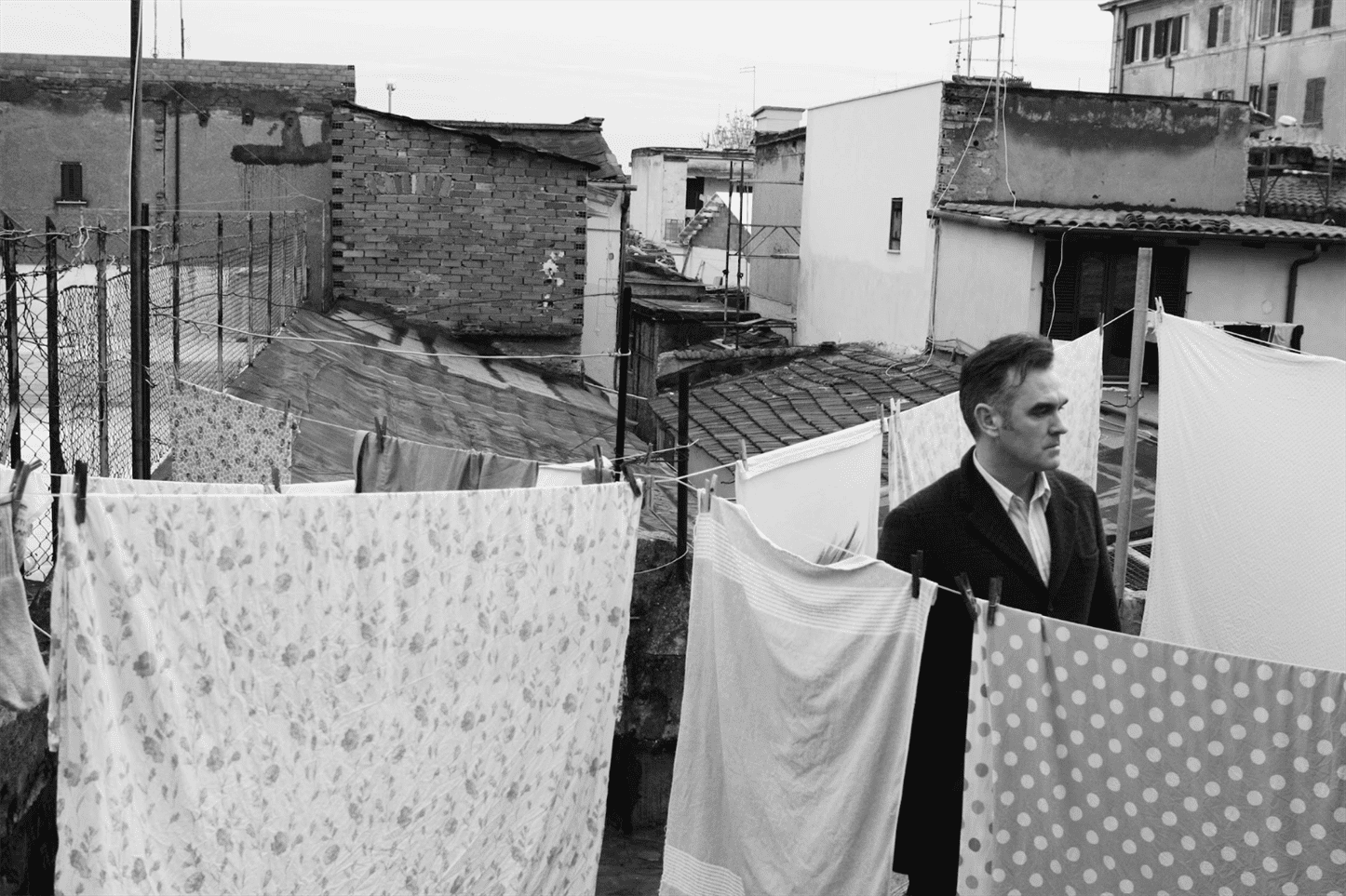
starting with the music industry, which has led him to shoot national and international artists such as Mark Knopfler, Morrissey, Lucio Dalla and many others, and then moving on to cinema where he portrays actresses and actors from the Italian and Hollywood scene including Robert De Niro, Al Pacino and Benicio del Toro.
Lovino has been the official photographer for several American film productions such as ‘House of Gucci’ and for prestigious television series such as ‘White Lotus’.
The most famous directors want him by their side, such as Martin Scorsese, Bellocchio and Ridley Scott, and with some a true friendship has been established that has lasted for years.
He has shot for years in the favelas and has been involved by various humanitarian associations in projects that have taken him around the world, recounting delicate themes through his always unique and emotional vision, at times with an antique flavour, in the best sense of the word. Nostalgic images, sooty and full of sentiment that pick up on the vein of the great English photography of the 19th century.
Fabio Lovino elegantly blends different styles and languages into a unique and exclusive overall vision that we will discover more about in this interview that he kindly granted us.
 At what point in your life were you captivated by photography and when did you realise it would be a definitive choice for you?
It all started with watching Fellini’s film ‘La dolce vita’, by which I was literally thunderstruck. From that moment on, when I was about 15 years old, I started to photograph and print photos; my parents used to wake up with photos hanging in the bathroom (laughs ed.).
I dreamt even then of doing this job, of working in film and music, but mainly of photographing people, and that black and white of Fellini’s was something incredible and wonderful in my opinion.
What has been your turning point?
I remember well that my first photo sold was a portrait of Gilberto Gil, a great Brazilian singer who later also became a politician.
I simply made a decision at a certain point and prepared a small portfolio to take to the editorial offices of music newspapers and I started out in that sector, I did a lot of interviews, covers and more than 20 years of touring and festivals like the one in Montreux. I had an all-black-and-white book with a lot of jazz musicians. Then I started photographing cinema. I always say that photography is made up of three people: the photographer, the subject and the light, and you have to know how to use the light well.

Stylistically speaking, who is your current reference point (if any) and who were you inspired by at the beginning of your career?
I have certainly been influenced by Irving Penn and David Bailey, whom I knew personally and whom I love in a special way because he is linked to Swinging London and to a prolific period also for music, to the birth of the Beatles and the Rolling Stones.
We all have our share of inspiration and it is sacrosanct, then of course everyone has to find their own way, especially now that we live in an era where there are so many mercenaries in every sector of work, you have to find an unmistakable and recognisable style; in this case your photos may appeal to some and others may not, but it is better that way because if everyone likes you in the end no one likes you. I personally have decided not to accept some works and to continue on a very specific path in order to protect myself and precisely because you have to make an authorial choice and safeguard your own language by giving it an exclusive look, namely your own.
Who was your mentor?
I took my first photographs in Tazio Secchiaroli’s studio, and I ended up there through a series of coincidences and connections.
So I started from there, with Sophia Loren’s personal photographer, but above all with the photographer whose stories inspired Fellini himself for the screenplay of ‘La Dolce Vita’; it was on Secchiaroli that the character of the paparazzo was created.
Tazio taught me so much and I owe much to him.
What do you think you could have done if you had not become a photographer?
As a boy to pay for my camera equipment and lenses I was a swimming pool instructor. At 22 I decided to take this path, now I would also like to be a cook.

You have shot many celebrities, your career is full of collaborations. With which character have you been able to get closest to the most intimate aspect of the person?
This can happen either in ten years or in an hour and it depends on several factors first of all mutual trust as in 15 years with Mark Knopfler .
There are people with whom I have had a real friendship for years like Claudia Pandolfi and Claudia Gerini and through my photos I tell this story.
Shooting is a total exchange with the subjects and this unfiltered exchange you don’t look for, you simply find it.
There is a lot of discussion about new technologies, how do you see the future of photography?
Well, maybe we will shoot by blinking (laughs ed.). I’ll tell you, maybe stupidly, I don’t consider the problem because I see that my work is considered as before. The Greeks used to say that art is the elevation of the human spirit and this thought is still relevant because art is part of man, so artificial intelligence can do things but the human factor is irreplaceable. Technology should not be penalised and it absolutely helps in all areas, but it should not crush man but help him.

How did your approach to directing come about?
I had already done TV programmes such as ‘Pop Life’ where Italian artists met foreign artists and we talked about art, and ‘Photocall’ where I shot Italian actresses trying to bring out their most intimate side.
At a certain point, I felt the need to narrate dynamically as well as statically and I founded a small production company, ‘Reggatta Production’.
I have shot several documentaries for WeWorld Save the Children and UNHCR on important topics such as violence against women and poverty in the world.
Of course, I have also dealt with lighter topics.
Shooting a documentary takes you, unlike a film with a screenplay, to tell the story of a person’s evolution through time and therefore the making of the film takes longer. For example, ‘Backliner’ on Riccardo Sinigallia, narrated by Valerio Mastrandrea and with the participation of many artists including Frankie Hi-nrg and Caterina Caselli, took almost four years.
Is there still something unfinished left in your drawer? What are you currently devoting yourself to?
There are always many things left unfinished because twenty-four hours a day is always short compared to what I would like to do.
One thing I miss and would like to do is photograph Bob Dylan, because with Allen Ginsberg and the encounter between music and poetry he played a fundamental role revolutionising songwriting and left his mark.
I am now working on two projects I care a lot about, a documentary on the Fosse Ardeatine and one on Marco Bellocchio.


